


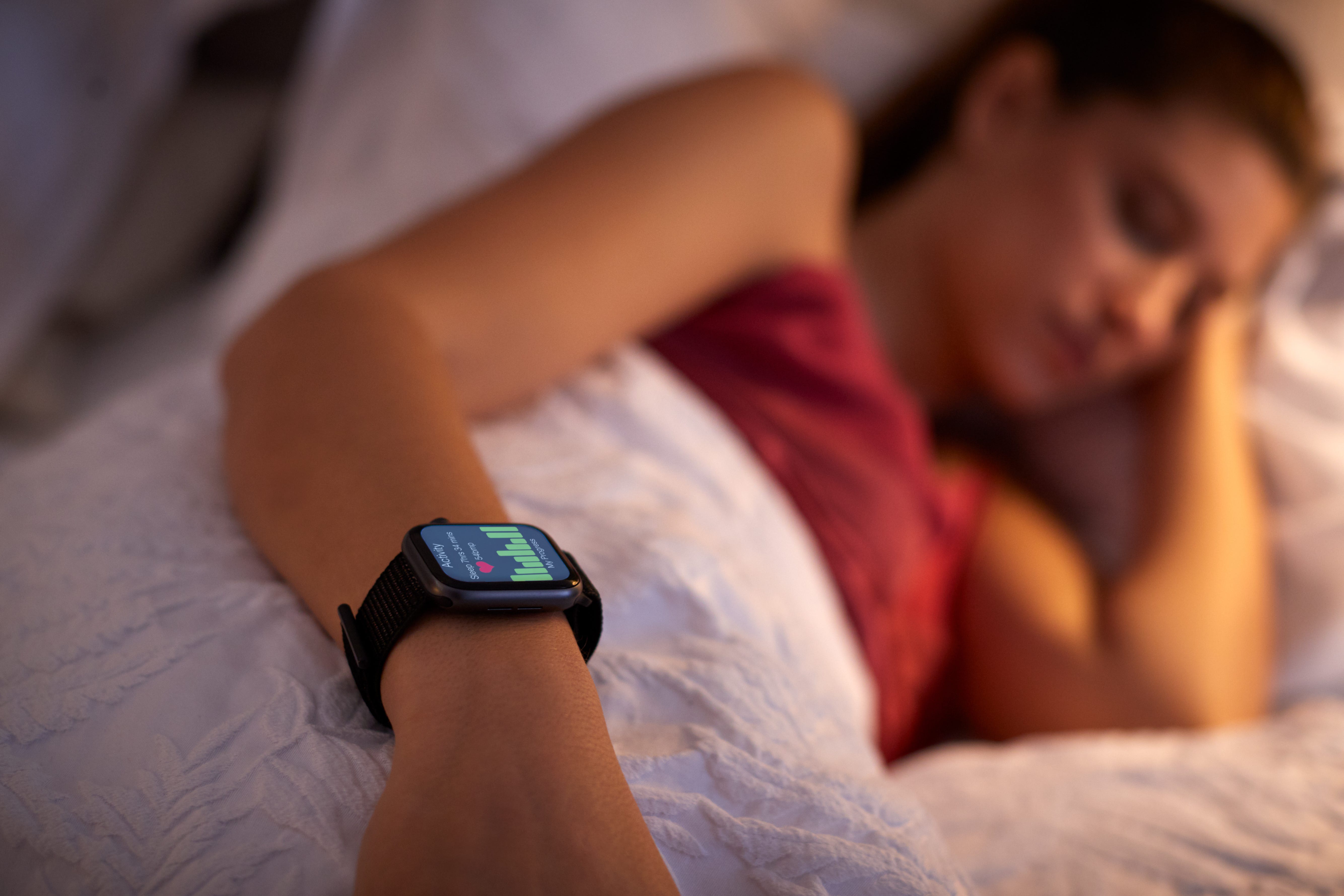
There was a time when most people judged the quality of their sleep by how they felt in the morning. They might remember waking during the night, recall a particularly vivid dream, or notice that they were unusually tired despite going to bed at a reasonable hour. Their assessment was necessarily subjective, but it reflected something important about sleep: the experience belonged to the person who had lived through it.
Today, many of us begin the morning with a different ritual. Before getting out of bed, we reach for a phone and examine a collection of measurements gathered while we slept. A watch or ring may report how many hours we spent asleep, estimate the time spent in different sleep stages, display changes in heart rate, and assign a numerical score to the night. Some devices offer recommendations about recovery, readiness, and whether we should adjust our activities for the day ahead.
The information can be fascinating, particularly for people interested in understanding their health. It can also create a curious situation in which someone wakes feeling reasonably well rested, only to discover that a device has assigned their sleep a disappointing score.
Suddenly, a night that seemed perfectly adequate begins to feel like a problem.
This raises an important question about the relationship between technology and health. Are we using sleep trackers to better understand our bodies, or are we gradually allowing the measurements to determine how we think we should feel?
The distinction matters because sleep is more complicated than the numbers displayed on a screen.
What Our Devices Actually Measure
Modern wearable technology has made remarkable progress in gathering information about the body. Depending on the device, a sleep tracker may use movement sensors, optical heart-rate measurements, skin temperature, and other physiological signals to estimate when someone falls asleep, how long they remain asleep, and how their sleep may be distributed across different stages.
These measurements can provide useful information about patterns over time. A person who routinely goes to bed at inconsistent hours may discover that their sleep duration varies considerably throughout the week. Someone who believes they are getting eight hours of sleep may realize that their actual sleep opportunity is substantially shorter. Changes in nighttime heart rate or other trends may encourage further attention to habits, illness, or recovery.
But there is an important difference between estimating sleep and directly measuring the physiological activity used to classify it.
Clinical polysomnography, commonly called a sleep study, records multiple biological signals, including brain activity, eye movements, muscle activity, breathing, and oxygen levels. These measurements allow trained professionals to evaluate sleep stages and identify certain disorders with a degree of detail that consumer wearables generally cannot provide.
Most consumer sleep trackers rely on algorithms that interpret indirect signals. Their estimates may be useful, but they are not interchangeable with the findings of a diagnostic sleep study. Accuracy varies among devices, individuals, and the particular measurements being evaluated.
This becomes especially important when a device reports the amount of time spent in deep sleep or rapid eye movement sleep. Although the resulting charts may appear precise, they remain estimates derived from the information the device can collect.
A graph showing ninety minutes of deep sleep may look reassuring, while another showing forty-five minutes may raise concern. Yet neither number, considered alone, establishes whether the person experienced healthy or unhealthy sleep.
The technology provides information. Understanding what that information means requires context.
When Better Data Creates More Anxiety
Sleep expert Nancy Rothstein has spent years encouraging people to examine their relationship with sleep rather than focusing exclusively on the science and technology surrounding it.
During a presentation to the American Academy of Physiological Medicine and Dentistry, she described a growing concern among people who have become so focused on measuring their sleep that the measurements themselves begin to interfere with their ability to rest.
The phenomenon is often called orthosomnia, a term used to describe an unhealthy preoccupation with achieving ideal sleep measurements. Although orthosomnia is not currently recognized as a separate formal diagnosis in major diagnostic classifications, clinicians and researchers have described patients whose efforts to obtain perfect sleep data appear to contribute to anxiety and sleep difficulties.
The problem is understandable.
Sleep trackers invite us to approach rest in much the same way we approach exercise, productivity, or other measurable activities. We receive scores, compare results, identify weaknesses, and attempt to improve performance. If a device suggests that we did not get enough deep sleep, we may begin searching for ways to increase it. If our score declines after an otherwise ordinary evening, we may try to determine what went wrong.
Eventually, the pursuit of better sleep can become another source of stress.
Someone who once went to bed without much concern may begin wondering whether they will achieve the right amount of REM sleep, whether their overnight heart rate will improve, or whether tomorrow morning’s score will reflect a successful night.
The irony is that sleep does not respond particularly well to performance pressure.
Unlike exercise, where deliberate effort can often produce an immediate change in activity, sleep depends on biological processes that cannot simply be commanded. We can influence the conditions that support sleep, but trying harder to achieve a particular sleep stage is not necessarily helpful.
When the pursuit of an ideal measurement creates anxiety, the technology intended to improve sleep may be working against its original purpose.
The Difference Between a Good Score and a Good Night
One of the limitations of sleep tracking becomes apparent when we consider how many different factors contribute to restorative sleep.
Duration is important, but it is not the only consideration. Sleep continuity, timing, breathing, neurological activity, medical conditions, medications, and individual physiology can all influence the quality of rest.
A consumer device may estimate that someone slept for eight hours and spent an appropriate amount of time in various sleep stages. Yet that person may still wake with a headache, experience persistent daytime fatigue, or have a bed partner who reports loud snoring and repeated pauses in breathing.
A reassuring sleep score does not necessarily explain those symptoms.
This is particularly relevant to sleep-disordered breathing.
Obstructive sleep apnea occurs when the upper airway repeatedly narrows or collapses during sleep, producing reductions or interruptions in airflow. These events may be accompanied by changes in oxygen levels, respiratory effort, and brief arousals that fragment sleep.
Some consumer wearables can estimate blood oxygen levels or identify patterns that may suggest breathing disturbances. Certain devices also offer features intended to flag possible sleep apnea risk. These capabilities may encourage people to seek appropriate evaluation, but their limitations must be understood.
A consumer sleep score cannot rule out obstructive sleep apnea. Even devices with specifically authorized sleep-apnea notification features are generally intended to identify possible risk under defined conditions, not replace medical diagnosis.
The absence of a warning should not be interpreted as proof that breathing is normal throughout the night.
This distinction matters because many people with sleep-related breathing disorders are unaware of what happens while they sleep. They may not remember waking, and they may assume that spending sufficient time in bed means their sleep is healthy.
The body can tell a different story.
What Dentistry Can Contribute to the Conversation
From the perspective of biological and airway-focused dentistry, the limitations of sleep tracking reinforce the importance of evaluating the whole patient rather than relying on a single measurement.
The mouth and surrounding facial structures are part of the anatomy involved in breathing. The relationship between the jaws, tongue, palate, and upper airway can be relevant when assessing factors associated with sleep-disordered breathing.
During a dental examination, certain findings may prompt additional questions about a patient’s sleep. Tooth wear, signs of grinding, a scalloped tongue, dry mouth, and particular anatomical characteristics can be worth considering alongside symptoms such as snoring, morning headaches, or persistent fatigue.
None of these oral findings independently diagnoses sleep apnea. They may occur for several reasons, and their significance depends on the broader clinical picture.
A patient who reports feeling exhausted despite adequate sleep, for example, may benefit from questions about nighttime breathing, witnessed pauses in respiration, and daytime sleepiness. If those concerns suggest a possible sleep disorder, appropriate referral and medical evaluation can help determine whether further testing is needed.
This collaborative approach is especially valuable because patients often encounter different healthcare professionals for different concerns. A physician may hear about fatigue, a dentist may observe significant tooth wear, and a bed partner may notice disruptive snoring. Each observation provides a different part of the story.
When those observations are considered together, they may reveal a concern that would be less apparent if each were viewed in isolation.
Technology can contribute to this process by documenting patterns and encouraging awareness, but it should not become a substitute for clinical judgment or appropriate diagnostic testing.
The objective is not to dismiss the measurements. It is to understand where they belong within a more complete evaluation of health.
Learning to Pay Attention Without Becoming Preoccupied
For people who enjoy using sleep trackers, the most useful approach may be to treat the information as a guide to patterns rather than a daily report card.
Looking at trends over several weeks can sometimes be more informative than reacting to a single night’s score. Changes in sleep duration, bedtime consistency, or other measurements may help someone recognize habits worth adjusting. The information can also provide useful context when discussing persistent symptoms with a healthcare professional.
At the same time, it is worth remembering that the body’s response to sleep is not entirely captured by a device.
How we feel upon waking, our ability to remain alert during the day, our concentration, mood, and general sense of well-being all contribute to our understanding of whether sleep is serving its restorative purpose.
These subjective experiences are not infallible. People can underestimate sleep difficulties or become accustomed to chronic fatigue. Some individuals with significant sleep disorders do not report the symptoms we might expect. Nevertheless, the patient’s experience remains an essential part of the clinical picture.
Rothstein encourages people to begin with practical questions about their sleep and daily functioning. Are they waking refreshed? Do they become unusually tired during the afternoon? Are they snoring or gasping during the night? Have their sleep patterns changed?
These questions do not require sophisticated technology, but they may reveal concerns that deserve attention.
They also return some responsibility for understanding sleep to the person experiencing it.
Rather than asking only whether the numbers look good, we can ask whether our sleep is supporting the life we want to live.
Technology Should Serve the Sleeper
There is no reason to reject useful technology simply because it has limitations. Wearable devices can encourage healthier routines, provide interesting information about physiological trends, and help people become more attentive to habits that affect their well-being.
For some individuals, a sleep tracker may be the reason they first recognize that they are consistently getting too little sleep. For others, an unusual pattern or notification may prompt a conversation with a healthcare professional that leads to an important diagnosis.
Those are meaningful benefits.
But the value of any measurement depends on what we do with it and whether it improves our understanding of the underlying problem.
A sleep score is not a diagnosis, and a chart cannot fully describe the experience of a night’s rest. The information may be helpful, but it should be interpreted alongside symptoms, medical history, and appropriate evaluation when concerns arise.
Perhaps the most useful role of technology is not to tell us whether we have succeeded at sleeping, but to help us recognize when something deserves closer attention.
This brings us back to a larger principle that runs throughout our understanding of sleep and whole-body health. The body is not simply a collection of numbers waiting to be optimized. It is a complex biological system whose functions depend on relationships among anatomy, physiology, behavior, and environment.
Healthy sleep requires more than adequate time in bed. It requires conditions that allow the brain and body to move through their normal restorative processes, including the ability to breathe effectively throughout the night.
When those conditions are present, sleep often takes care of itself. When they are not, better measurements alone cannot correct the problem.
There is something reassuring about recognizing that distinction. We do not have to achieve a perfect sleep score every morning, and we do not need to treat every variation in a wearable device’s report as evidence that something is wrong.
We can use technology to become more informed without allowing it to make us more anxious. We can pay attention to patterns without becoming preoccupied with individual measurements. And when persistent symptoms suggest that sleep is not providing the restoration we need, we can seek a more complete understanding of why.
The purpose of measuring sleep, after all, should be to help us sleep better and live healthier lives.
If the measurement itself begins to interfere with that goal, it may be worth putting the device aside for a while and remembering that the most important part of the equation has always been the person wearing it.
The Johnson Papers explores the connections between oral health, breathing, sleep, and whole-body wellness through the perspective of biological dentistry.
This article was informed by themes discussed during sleep expert Nancy Rothstein’s September 2026 presentation to the American Academy of Physiological Medicine and Dentistry (AAPMD), particularly her observations about wearable technology, sleep anxiety, and the importance of understanding the sleeper. The clinical discussion of airway health and diagnostic evaluation expands upon those themes.