


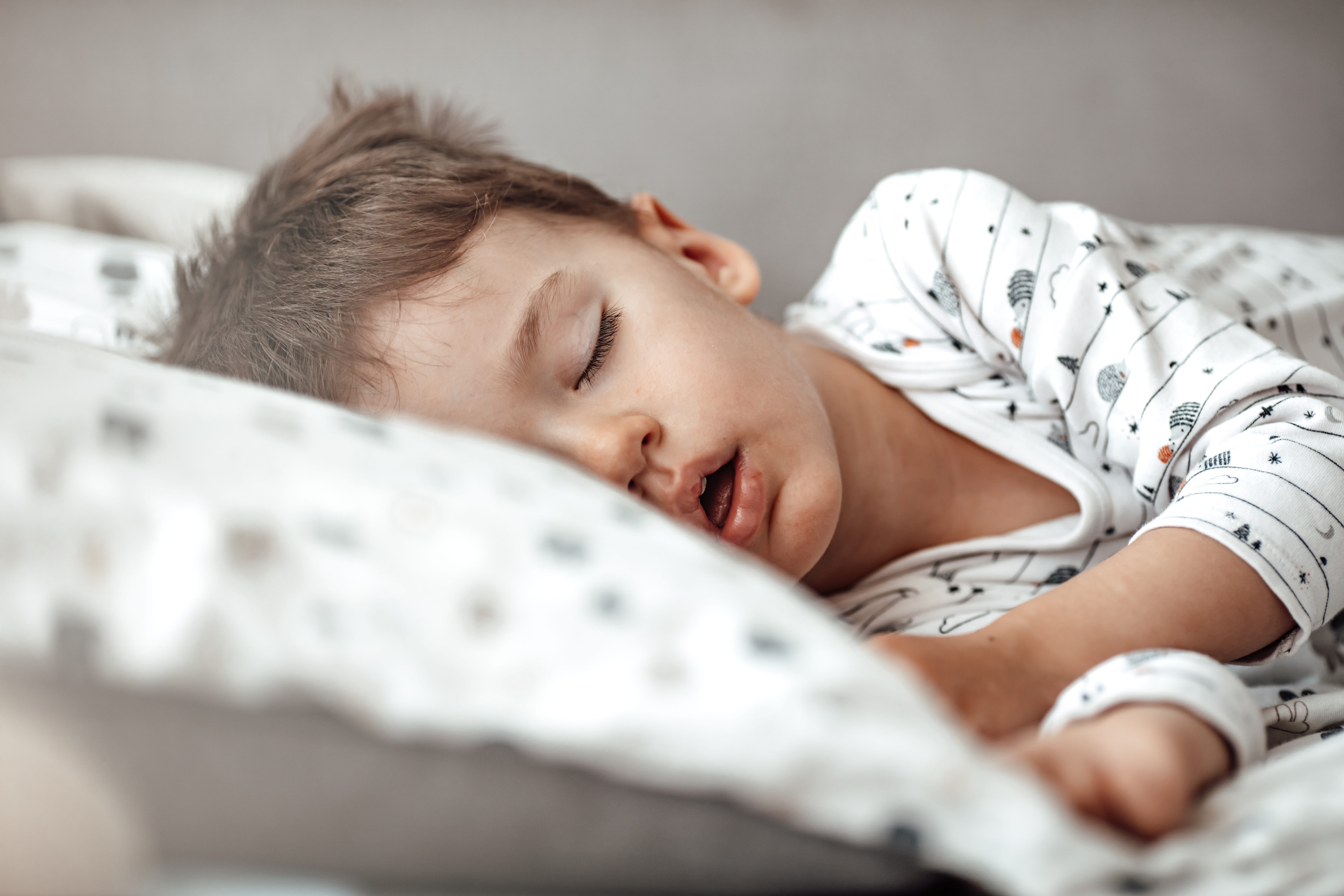
Many parents have found themselves in a child’s bedroom after the lights have been switched off and have stayed there for a while. The child might be lying out across the bed, with the blankets pulled down and the head leaning back against the pillow. The lips would be open. There could be a weak snore, a bit of restlessness, or breathing that is heavier than one would anticipate. The situation does not seem urgent at all. After all, the child is asleep and it is natural to think that having an open mouth is just one of the various harmless ways in which children sleep.
It is often harmless and only temporary; a cold, seasonal allergies, or having had an unusually tiring day can alter the way anyone breathes for one or two nights. Nevertheless, ongoing mouth breathing should attract a different sort of consideration. The fact that a child has obstructive sleep apnea cannot be proven by this alone, and not every child who snores has a sleep disorder. But if a child regularly sleeps with their mouth open, the appropriate question is not merely how to get the mouth to close, but why the child’s body has decided that the mouth should remain open in the first place.
The importance of that distinction lies in the fact that breathing is not just a habit added on to health; it is a function which the body has to carry out every minute, including during the long periods when a child is growing, consolidating memory, regulating hormones, and restoring the nervous system via sleep. If the preferred way of breathing through the nose seems insufficient, the body will find an alternative route and mouth breathing could be that alternative.
A habit, a symptom, or a workaround?
The nose is meant to be the main channel for breathing when at rest, carrying out the functions of warming, humidifying, and filtering the air before it gets to the lungs. The mouth does serve as an important alternative route, especially during intense physical activity or when the nasal passages are temporarily blocked. The issue is not that children at any time breathe through their mouths; the problem lies in a tendency that continues during calm daytime activities or while asleep, particularly when this is seen together with other indications that breathing may be requiring more effort than it should.
One cannot give a single explanation for that pattern. It might be due to nasal allergies, chronic congestion, enlarged tonsils or adenoids, differences in nasal or craniofacial anatomy, excess weight, reduced muscle tone, and a number of other medical or developmental factors. In certain children the obstruction starts the pattern; in others, oral posture and muscle function may contribute to it even when the initial obstruction has improved. Often, several of these factors occur together.
That is the reason why forcing the lips together cannot be considered a diagnosis or a treatment. Discussions on the internet about mouth taping have caused closed-mouth sleep to appear as something that can be imposed from the outside. However, this line of reasoning fails to take into account a fundamental biological issue: can the child breathe comfortably through the nose? A systematic review in 2025 found only limited evidence of benefit and did identify possible harm when mouth taping is used without discrimination, especially in cases where there is nasal obstruction. Before the airway has been properly assessed, blocking the alternative route may mask a symptom without getting to the root of the problem. It is not appropriate for children to have their mouths taped shut as a self-made remedy for snoring or for suspected airway problems.
A better way to look at it is to consider the open mouth as being a source of information. It is not misbehavior for a child to have a certain breathing pattern, and repeatedly telling them to “close their mouth” usually does not lead to correction. The body might be addressing a problem in the only way it knows how.
What Sleep-Disordered Breathing Can Look Like in a Child
Sleep-disordered breathing involves a range of conditions. On one side of the spectrum is primary snoring, while further along it includes increased resistance to airflow, repeated breathing disturbances, and obstructive sleep apnoea, in which the upper airway is either partially or totally blocked during sleep. It is not possible to tell these conditions apart simply by looking at a person, and a child’s symptoms do not always match the well-known adult pattern of loud snoring followed by clear daytime sleepiness.
Children might become restless instead of sleepy and could toss and turn, sleep with their necks extended, sweat a great deal, wet the bed even though they had previously stayed dry, have difficulty waking up in the morning, or say that they have headaches or a dry throat. During the day, a lack of sleep may show itself as irritability, emotional volatility, trouble concentrating, hyperactivity, or a fall in school performance. Some children snore loudly while others make only a little noise but appear to work harder to breathe.
No single one of these signs can be used to confirm a diagnosis of obstructive sleep apnea. While mouth breathing may be a related feature rather than proof of the condition and is not always the direct cause of a sleep disorder, a 2025 cross-sectional study of children at school age, for instance, discovered that children who breathed through their mouths were found to be at a substantially higher risk of having sleep-disordered breathing than those who breathed through their noses; however, a screening questionnaire is not equivalent to an overnight sleep study. The significance of these findings is that they show us when to ask better questions and when further evaluation may be appropriate.
The American Academy of Pediatrics and the American Academy of Pediatric Dentistry both acknowledge the importance of screening children for snoring and other signs of sleep-related breathing problems. If there is regular snoring along with some concerning symptoms, a sleep study properly interpreted is still the accepted way of deciding whether or not obstructive sleep apnea is present. While clinical observation can detect risk, it cannot by itself confirm the diagnosis.
The fact should give parents peace rather than cause them fear. The fact that the mouth is open does not mean that the worst has to be assumed; it means that one is refusing to ignore a persistent pattern until it has been understood.
What the Mouth May Reveal
We are in a unique position in this discussion since we regularly examine the structures which help to shape the upper airway and which give us information about the way a child breathes, chews, swallows and rests the tongue. We are able to observe the width and shape of the dental arches, the height and form of the palate, the relationship between the upper and lower jaws, the position of the tongue, the state of the oral tissues, and at times the size of the tonsils that are visible behind the tongue. We also have the chance to ask questions that might not come up during a normal visit—such as whether the child snores, whether they sleep with their mouth open, whether they wake up with a dry mouth, whether they grind their teeth, whether they struggle in the morning, and whether they become unusually restless or irritable during the day?
The results aren’t definitive diagnoses. The fact that the upper jaw is narrow doesn’t prove that a child has sleep apnea. Tooth overcrowding doesn’t indicate one specific cause. Enlarged tonsils do not have the same effect on all children. Moreover, tooth grinding, which is frequently attributed to stress, can have a number of different origins. It is the pattern that emerges when the history, the examination, and the family’s observations all point in the same direction that is important.
Mouth breathing also has an effect on development. When at rest, the tongue, the lips, the cheeks and the facial muscles produce a balance of mild forces around the developing teeth and jaws. However, when the lips stay apart and the tongue rests low down instead of touching the roof of the mouth, this normal environment is altered. Numerous studies have repeatedly discovered associations between chronic mouth breathing and features such as a narrower upper jaw, a higher palate, greater vertical facial growth, crossbite, open bite, or other types of malocclusion.
Yet association is not equivalent to a simple cause-and-effect relationship. Craniofacial growth is affected by genetics, anatomy, muscle function, airway resistance, habits, and the passage of time. A certain facial pattern might make breathing more difficult, while difficult breathing in turn may affect posture and function throughout growth. Although current reviews identify a consistent relationship, they also point out considerable differences in how the studies define mouth breathing and measure development. The evidence does advocate for early intervention and for an interdisciplinary assessment, but it does not support the idea of telling every parent that a single breathing habit is responsible for the entire shape of a child’s face.
It is a significant boundary; instead of substituting one narrow explanation for another, airway-centered dentistry should broaden our clinical perspective.
Screening Is Not the Same as Treating
The most important thing the dentist can do is to realise that all these different aspects fit into one overall discussion. A pediatrician is in a position to look at general health and development. An expert in ear, nose and throat matters can examine nasal blockage, the tonsils, the adenoids and other anatomical issues. A sleep physician can decide if testing is necessary and can interpret the results of any tests carried out. A dentist or an orthodontist can assess the jaws, the dental arches, the bite, the oral tissues and the pattern of growth. A myofunctional therapist may help with breathing, tongue position, lip seal and swallowing function if that kind of treatment is suitable and the airway can support it.
It is not necessary for every child to see every specialist nor is it essential that all children should have treatment. The kind of care provided should be based on the cause and the diagnosis rather than on a set product or procedure. For example, an obstruction due to an allergy should not be dealt with in the same way as one caused by enlarged tonsils, a marked skeletal discrepancy, excess weight, or a learned oral posture which persists after nasal breathing has improved.
The same degree of caution should be extended to dental and orthodontic treatment. Palatal expansion or other orthodontic procedures may be of benefit to individually selected children who have appropriate craniofacial indications and can constitute part of a comprehensive care plan. They should not, however, be offered as universal remedies for pediatric sleep apnea. The American Academy of Pediatric Dentistry points out that the evidence for some dental treatments in children is still limited, consisting of small studies and short periods of follow-up. A dental appliance can affect oral structure, but it cannot take the place of an accurate diagnosis or of medical treatment when medical treatment is required.
It is not a plea for reducing the amount of work. It is an argument in favour of carrying out the correct things in the proper sequence.
What Parents Can Notice
There is no need for parents to become experts in sleep. In fact, they are the ones most likely to realise that something has changed or that a certain pattern has continued. It can be helpful to make a few careful observations such as whether the child only breathes through the mouth during colds or most nights, whether snoring happens occasionally or regularly, whether the child gasps or seems to stop breathing, whether the head and neck are in odd positions, and whether the child’s sleep appears calm or physically restless. Symptoms such as a dry mouth in the morning, headaches, difficulty in waking up, bedwetting starting again, feeling tired during the day, being hyperactive, experiencing changes in mood, or having trouble concentrating may provide useful additional information.
A healthcare professional may at times find it helpful to look at a short video of the child sleeping, even though the video cannot take the place of formal testing. The observations can be given to the child’s pediatrician and dentist, who will then decide if it is necessary to refer the child to an ENT, a sleep physician, or some other clinician. In cases where there are obvious pauses in breathing, gasps, choking episodes, changes in colour, or difficult breathing, medical attention should be sought promptly.
Parents must not think that snoring is just an indication of deep sleep, try to diagnose sleep apnea at home, or start an internet course of treatment before they know why their child is mouth breathing. The goal is not to assign labels but to realize that a child’s body might be working harder than it should to carry out its most fundamental function.
The Question Behind the Open Mouth
Biological dentistry encourages us to go beyond examining a single tooth without assuming that all health problems start in the mouth, while airway-centered dentistry asks us to take into account breathing and sleep without saying that dentistry can diagnose or treat all airway disorders. The worth of these approaches lies in the relationships between them—namely, the way nasal airflow, oral posture, facial growth, sleep quality, behaviour, inflammation, and development can influence each other over time.
For many years dentistry has mainly judged success by the lack of cavities and by the straightness of the teeth. While these results are still important, they by no means give the full picture. A beautiful smile is something that exists as part of a living system. The jaws have functions to perform. The tongue has a place where it can rest and a part to play in swallowing. The airway has to stay open and sleep must restore the body rather than having to be repeatedly rescued from interrupted breathing.
There is no need for parents to feel worried again; they just need to be allowed to notice.
A child who is sleeping with their mouth open might just have a temporarily blocked nose; the child could also be displaying a method which has now become so well known that nobody ever stops to question it. The next thing to do isn’t to force the mouth shut, but to work out what causes it to keep opening.
References
American Academy of Pediatric Dentistry. Policy on Obstructive Sleep Apnea (OSA). The Reference Manual of Pediatric Dentistry. 2026–2027.
Marcus CL, Brooks LJ, Draper KA, et al. Diagnosis and Management of Childhood Obstructive Sleep Apnea Syndrome. Pediatrics. 2012;130(3):576–584. doi:10.1542/peds.2012-1671.
Primarti RS, Fatma A, Jayanti CNR, Musnamirwan IA, Setiawan AS. Mouth Breathing and Its Impact on Sleep Breathing Disorders in Children: A Cross-Sectional Study in Bandung, Indonesia. Clinical, Cosmetic and Investigational Dentistry. 2025;17:435–444. doi:10.2147/CCIDE.S536188.
Sotero Grande E, Checa-Caratachea XA, Cruz-Hervert LP, Castillo Salazar G, González-Aragón Pineda ÁE. Mouth Breathing and Craniofacial Development in Children: A Systematic Narrative Review and Clinical Implications. Healthcare. 2026;14(12):1737. doi:10.3390/healthcare14121737.
Lin L, Zhao T, Qin D, Hua F, He H. The Impact of Mouth Breathing on Dentofacial Development: A Concise Review. Frontiers in Public Health. 2022;10:929165. doi:10.3389/fpubh.2022.929165.
Rhee J, Iansavitchene A, Mannala S, Graham ME, Rotenberg B. Breaking Social Media Fads and Uncovering the Safety and Efficacy of Mouth Taping in Patients With Mouth Breathing, Sleep-Disordered Breathing, or Obstructive Sleep Apnea: A Systematic Review. PLOS ONE. 2025;20(5). doi:10.1371/journal.pone.0323643.
The article is for educational purposes only and should not be used in place of a personal medical or dental diagnosis. Anyone who is worried about a child’s breathing or sleeping habits should see a properly qualified healthcare professional.