


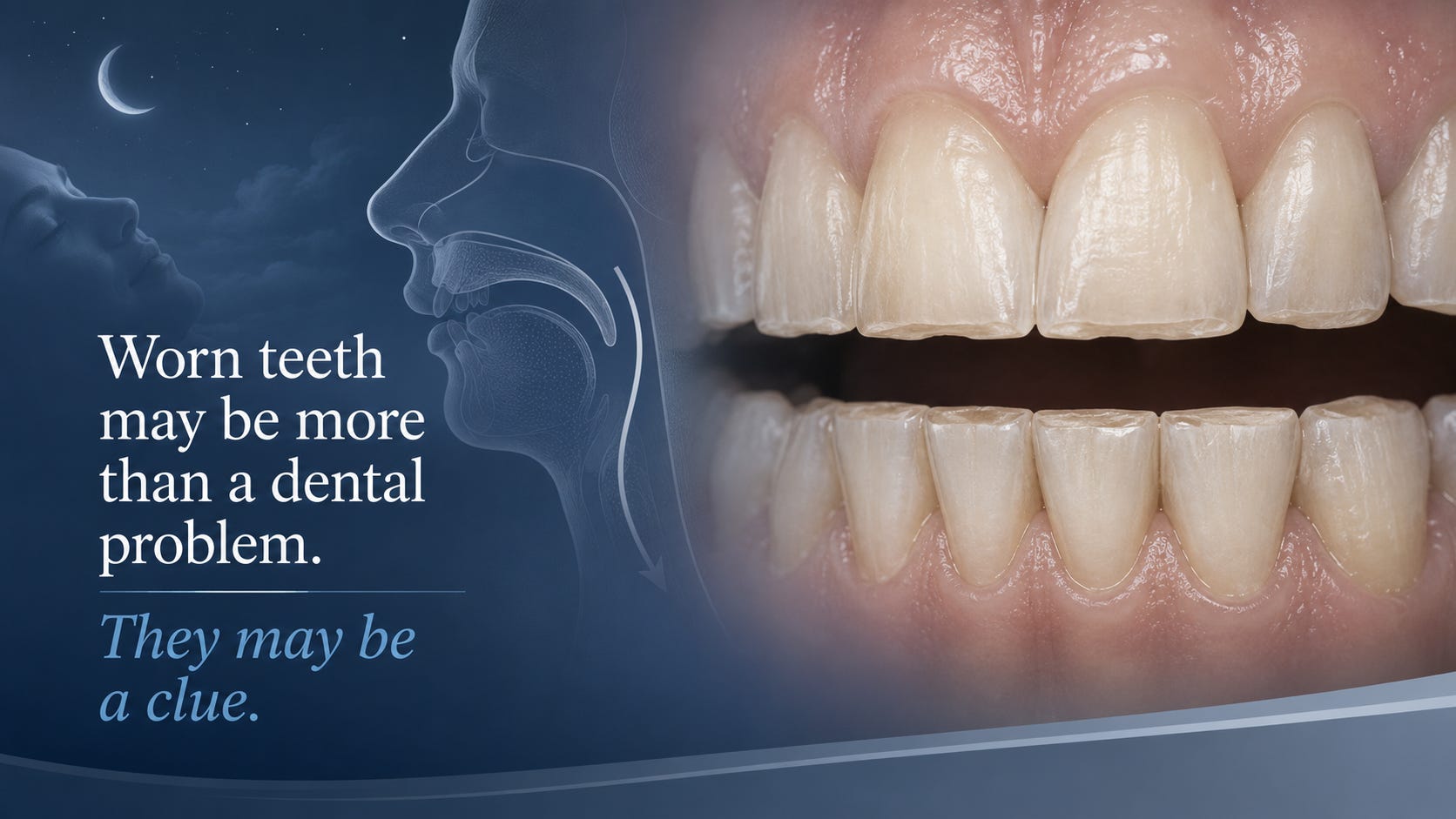
After more than forty years of practicing dentistry, one finding has become remarkably common in my patients: worn teeth.
Flattened teeth. Shortened teeth. Teeth that have lost their natural edges, cusps, and anatomy. Teeth that look as though they have been working all night.
If I had to estimate, I would say a very large percentage of the patients I examine show some degree of tooth wear. Most patients do not notice it. Dentists notice it immediately.
That is because dentists and hygienists are trained to recognize what teeth are supposed to look like. We study the anatomy of each tooth in detail. We learn the natural height, width, shape, ridges, grooves, cusps, and incisal edges. We learn to identify extracted teeth simply by their anatomy and know where they belong in the mouth.
That training matters because tooth wear changes the natural architecture of the mouth. A tooth that was once tall, sharp, rounded, or defined may become flat, short, thin, chipped, polished, or squared off.
To the patient, this may seem normal.
To a dentist, it may look like a story.
The question is: what story is the wear trying to tell?
Not All Tooth Wear Looks the Same
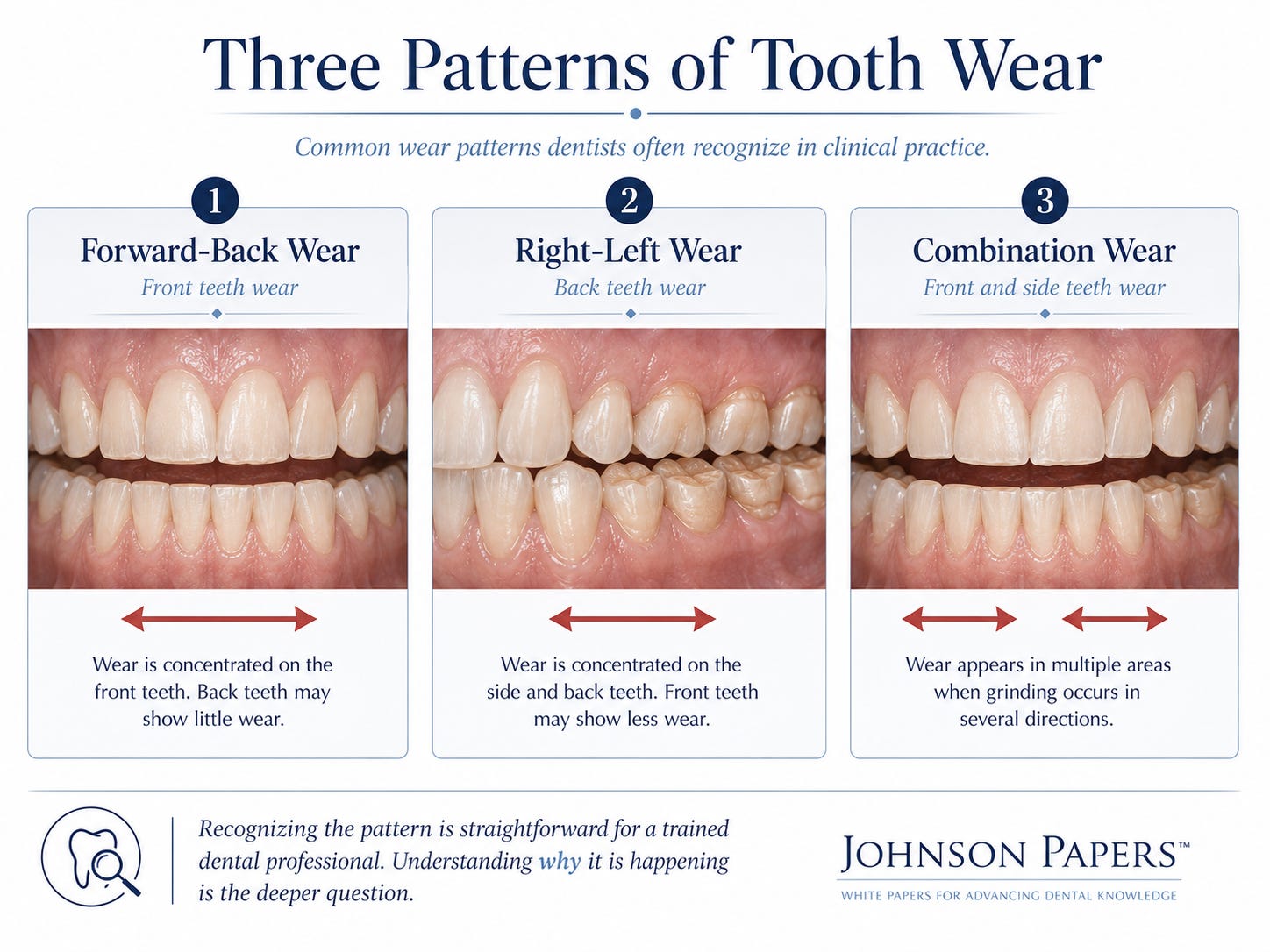
In clinical practice, worn teeth do not all follow the same pattern.
Some patients show wear primarily on the front teeth. In these cases, the jaw may be moving forward and backward, and the front teeth take most of the force. The back teeth may show very little wear.
Other patients show wear more heavily on the back teeth. This may suggest more right-to-left or side-to-side grinding. The posterior teeth may lose cusp height and definition, while the front teeth may appear less affected.
A third group shows wear in multiple directions. These patients may grind forward and back, right and left, or in a combination pattern. The result can be wear across many teeth, sometimes more visible in the front, sometimes more visible in the back, and sometimes spread throughout the mouth.
Tooth wear itself can happen for multiple reasons. Dentists commonly think in terms of attrition, erosion, abrasion, and other contributing forces. Attrition refers to tooth-to-tooth contact. Erosion involves chemical dissolution of tooth structure, often from acid exposure. Abrasion involves outside mechanical forces. In real life, these categories often overlap. A person may grind, have reflux, drink acidic beverages, brush aggressively, breathe through the mouth, and have dry mouth all at the same time. Tooth wear is often multifactorial.
That is why the question is not simply, “Do you have worn teeth?”
The better question is: Why are your teeth wearing down?
The Old Explanation: “You Must Be Stressed”
When I was in dental school, we were taught that patients grind or clench their teeth because of stress.
That was the standard explanation.
A patient had worn teeth. We pointed it out. The patient asked, “Why?” We answered, “Stress.”
I never completely liked that explanation.
Stress is real. Anxiety is real. The nervous system can absolutely influence jaw muscle activity. Some people clench during the day when they are concentrating, angry, anxious, or under pressure.
But stress never seemed like the whole story.
Many patients with significant tooth wear do not identify as especially stressed. Many deny grinding. They often say, “No, I don’t grind my teeth.”
And they may be telling the truth as they understand it.
They are asleep when much of this may be happening. They do not know what their jaw is doing at 2:00 in the morning.
Modern definitions of bruxism are also more nuanced than simply “grinding because of stress.” International consensus describes bruxism as repetitive jaw-muscle activity that may involve clenching, grinding, bracing, or thrusting of the mandible, and it distinguishes sleep bruxism from awake bruxism.
Over time, I began asking a different question.
What if some patients are not grinding simply because they are stressed?
What if some patients are grinding because their body is struggling to breathe?
The New Question: Could the Airway Be Involved?
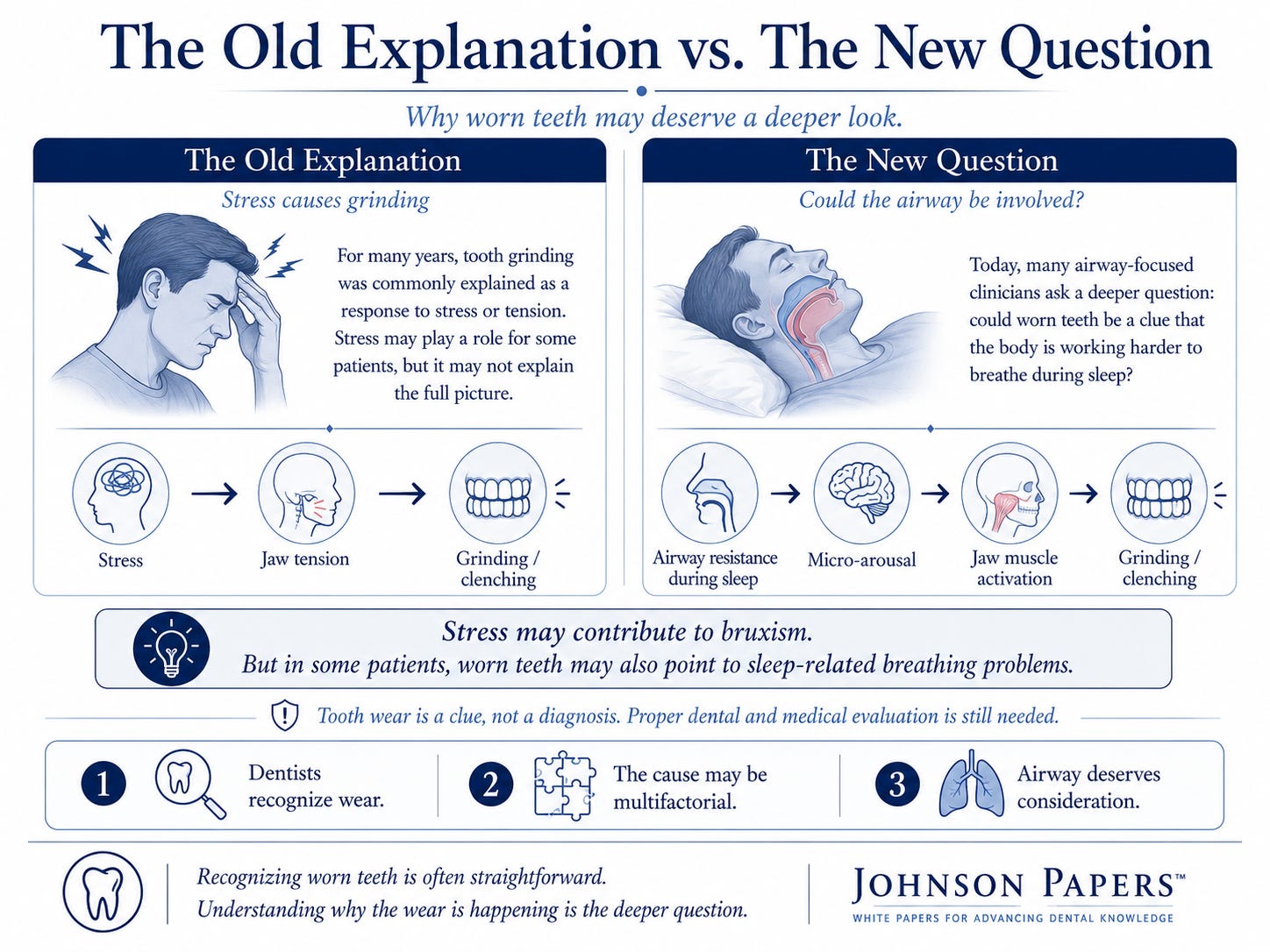
As my understanding of airway dentistry evolved, I began seeing worn teeth differently.
The teeth were still important. The bite was still important. The jaw joints were still important.
But I began to wonder whether the teeth were sometimes showing evidence of something happening deeper in the body during sleep.
The American Dental Association recognizes that dentists can play an important role in the multidisciplinary care of patients with sleep-related breathing disorders. The ADA policy statement includes snoring, obstructive sleep apnea, and upper airway resistance syndrome among sleep-related breathing disorders and notes that dentists are well positioned to help identify patients at greater risk and refer them for appropriate medical diagnosis.
That does not mean dentists diagnose sleep apnea on their own. They do not. Sleep-related breathing disorders require proper medical evaluation.
But dentists are often the first healthcare providers to see the signs in the mouth.
Worn teeth may be one of those signs.
The Airway-Bruxism Sequence
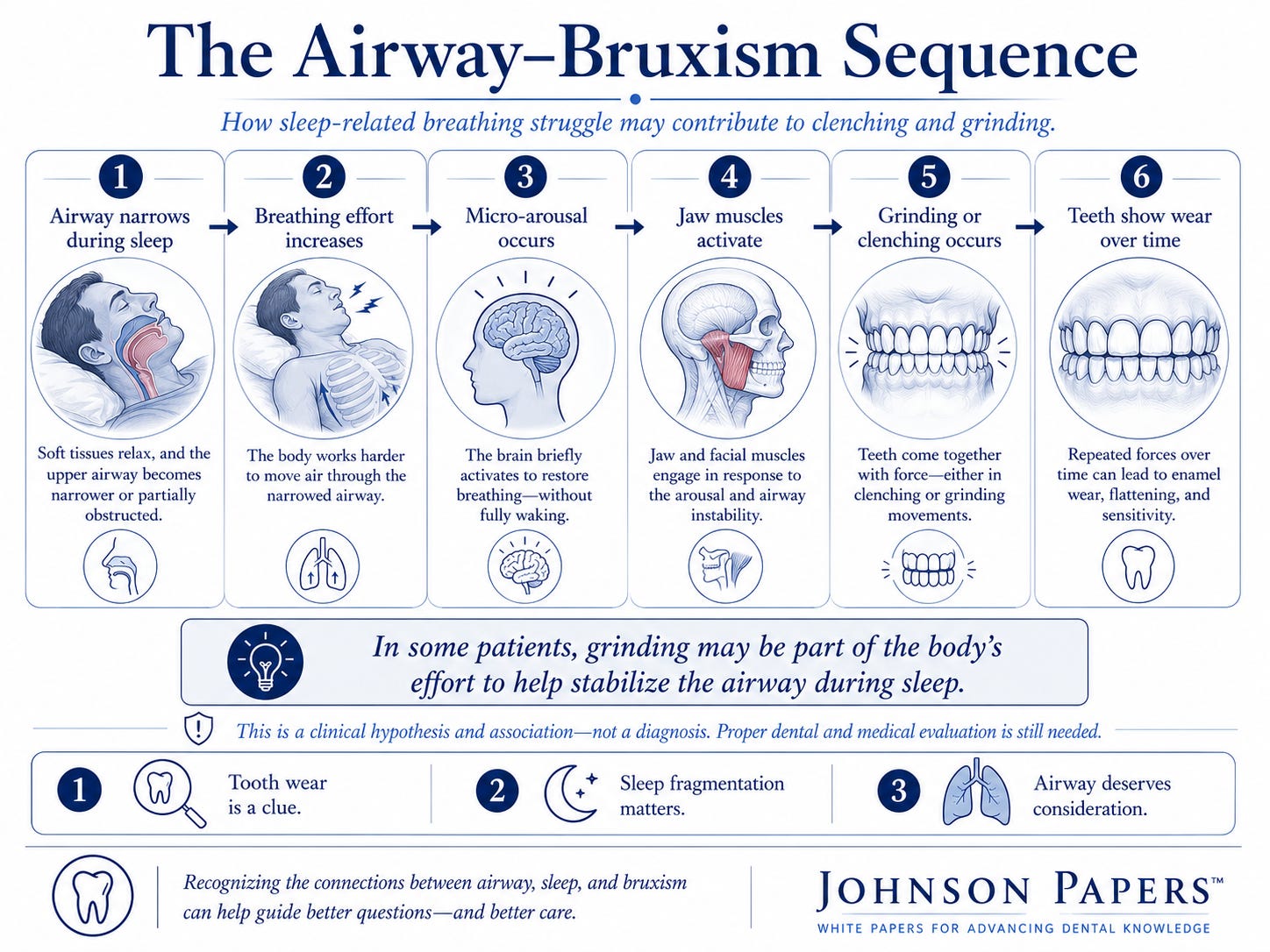
Here is the clinical idea I want patients and practitioners to consider:
Some tooth wear may represent the visible dental evidence of a nighttime survival strategy.
During sleep, the upper airway may narrow. In obstructive sleep apnea, the upper airway repeatedly narrows or collapses, causing partial or complete airflow interruption despite breathing effort. This can lead to oxygen drops, arousals, and fragmented sleep.
Upper airway resistance syndrome, often called UARS, can be more subtle. In UARS, the airway may not fully collapse and oxygen levels may not drop dramatically. Instead, the person experiences increased airway resistance, increased breathing effort, and repeated arousals from sleep. These respiratory effort-related arousals can fragment sleep even when the patient does not meet classic sleep apnea thresholds.
Now think about what the jaw may be doing during those moments.
The body is not passive during sleep.
If breathing becomes restricted, the brain may respond. A micro-arousal may occur. Jaw muscles may activate. The lower jaw may move. The tongue and soft tissues may shift. In some patients, that jaw activity may include clenching, grinding, or bracing.
Over time, the teeth may begin to show the evidence.
This does not mean every person who grinds has sleep apnea.
It does not mean every person with worn teeth has UARS.
It does not mean tooth wear is a diagnosis.
But the relationship between sleep bruxism and sleep-related breathing disorders is important enough to investigate. A large polysomnographic study found sleep bruxism to be highly prevalent among adults with obstructive sleep apnea, while also noting that the relationship between bruxism events, respiratory events, and arousals is complex and not purely linear.
That is exactly the point.
The relationship is real enough to matter. But complex enough that we should be careful.
What I See Clinically
In my own practice, when I see significant tooth wear, I begin asking about sleep.
How is your sleep?
Do you wake up rested?
Do you snore?
Has anyone told you that you stop breathing?
Do you wake with headaches?
Is your mouth dry in the morning?
Do you clench your jaw?
Do your jaw joints click or pop?
Do you wake up tired even after enough hours in bed?
Very often, patients with worn teeth tell me their sleep is poor.
Some have already taken a sleep test and were told they do not have sleep apnea.
Some were told their sleep apnea was “mild.”
Some have never been tested.
Some do not want to be tested because they assume the only possible outcome is being told to wear a CPAP machine.
I understand that hesitation.
But avoiding the question does not protect the patient. It simply delays understanding.
If a patient is grinding away tooth structure night after night, the question should not only be:
“How do we protect the teeth?”
The question should also be:
“What is driving the grinding?”
Why Some Sleep Tests May Miss the Problem
Many patients assume that a normal sleep test means their sleep is healthy.
That may not always be the full story.
Home sleep apnea tests can be useful in the right patient. But they may not capture every sleep-related breathing issue equally. Some tests are better at identifying obstructive sleep apnea than subtle flow limitation, respiratory effort, or arousal-based sleep fragmentation.
For patients suspected of having UARS, this can matter. UARS may involve increased breathing effort and arousals without major oxygen desaturation. That makes it harder to identify if the testing method or scoring approach is focused mainly on apneas, hypopneas, and oxygen drops.
The American Academy of Sleep Medicine recommends that if a single home sleep apnea test is negative, inconclusive, or technically inadequate, polysomnography should be performed when clinical concern for obstructive sleep apnea remains.
This is one of the reasons I take tooth wear seriously.
A patient may “pass” a test and still feel terrible.
A patient may have oxygen levels that look acceptable and still experience fragmented sleep.
A patient may not meet the classic threshold for obstructive sleep apnea and still struggle to breathe comfortably through the night.
Oxygen is not the only issue.
Breathing effort matters.
Sleep fragmentation matters.
Arousals matter.
The body may know there is a problem before the numbers look dramatic.
Symptoms That Deserve a Deeper Look
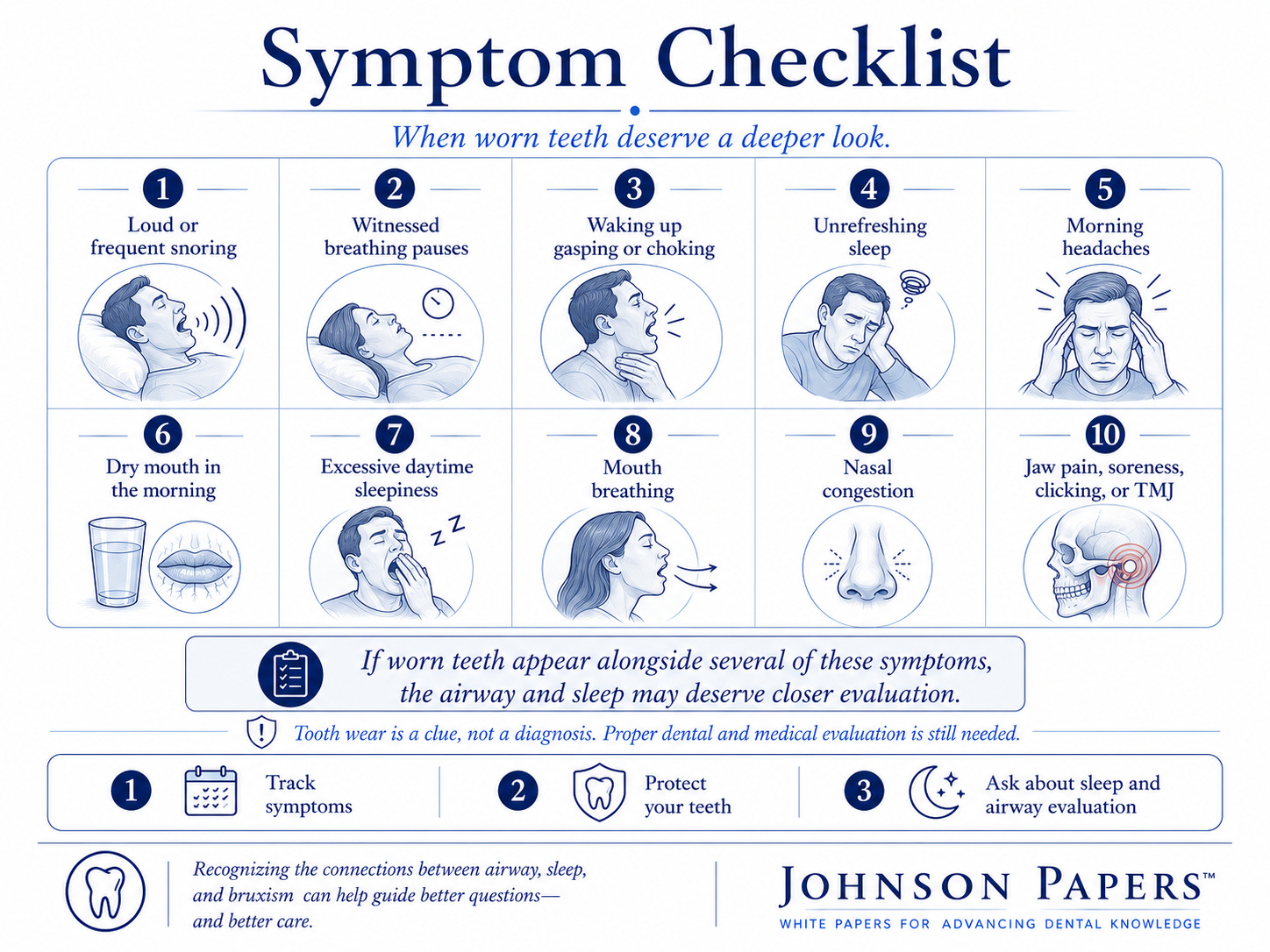
Worn teeth by themselves do not diagnose an airway problem.
But worn teeth combined with other symptoms should raise the level of curiosity.
Common symptoms that may deserve further evaluation include:
Loud or frequent snoring
Witnessed breathing pauses
Waking up gasping or choking
Unrefreshing sleep
Morning headaches
Dry mouth in the morning
Excessive daytime sleepiness
Mouth breathing
Nasal congestion
Jaw pain, soreness, clicking, or TMJ symptoms
These symptoms do not all mean the same thing. They do not automatically point to one diagnosis. But they do suggest that the patient’s sleep and airway deserve a closer look.
Sometimes the patient has classic obstructive sleep apnea symptoms.
Sometimes the picture looks more like upper airway resistance.
Sometimes the primary issue may be bruxism without a clear airway component.
Sometimes all of these overlap.
That is why evaluation matters.
OSA, UARS, and Bruxism Are Not the Same Thing
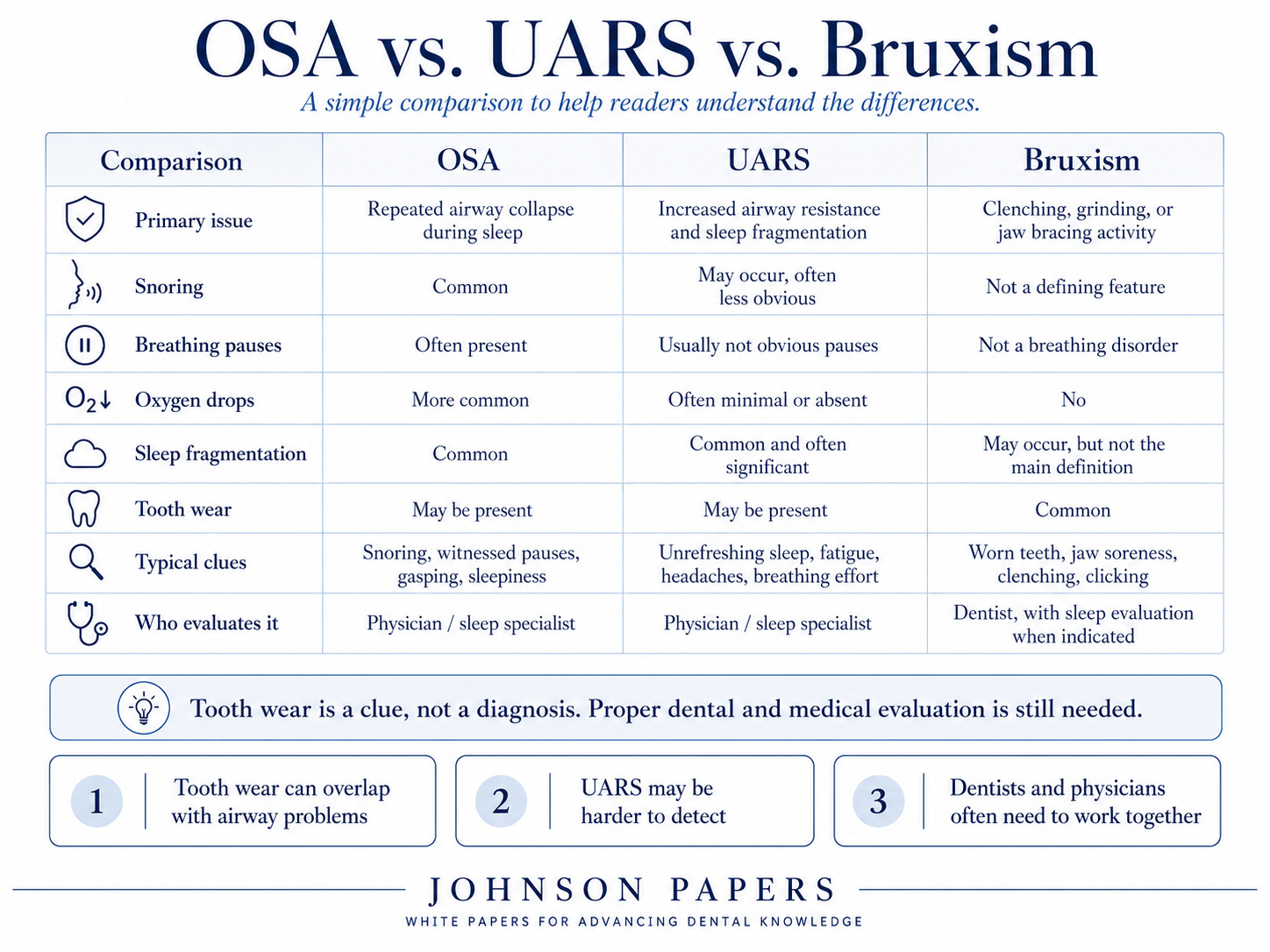
Obstructive sleep apnea, upper airway resistance syndrome, and bruxism are related conversations, but they are not the same condition.
OSA typically involves repeated airway collapse or partial collapse during sleep. It is often associated with snoring, witnessed pauses, gasping, oxygen changes, and daytime sleepiness.
UARS may involve increased airway resistance and repeated arousals without obvious apneas or major oxygen drops. These patients may be tired, wired, anxious, fatigued, or unrefreshed even though they do not fit the classic sleep apnea profile.
Bruxism involves jaw-muscle activity such as clenching, grinding, bracing, or thrusting. It may occur during sleep or wakefulness. It may exist on its own, or it may overlap with airway issues, stress physiology, medications, reflux, occlusal factors, or other contributors.
The key is not to force every patient into one category.
The key is to ask better questions.
Protect the Teeth While Searching for the Cause
When a patient has significant tooth wear, one practical step is often to protect the remaining tooth structure.
A well-made dental guard may help reduce further tooth damage. It does not necessarily stop the underlying muscle activity. It does not diagnose sleep apnea. It does not treat an airway disorder by itself.
But it can protect teeth while the larger question is being investigated.
In my practice, I do not like soft, rubbery night guards for heavy grinders. I also do not like bulky full-mouth guards for every patient simply because that is what many of us were taught to make.
A bulky appliance can be uncomfortable. It can affect sleep. It may not be tolerated well.
I often prefer a more conservative design, such as an upper canine-to-canine guard, when clinically appropriate. In some cases, a lower guard may be better. The right design depends on the patient’s bite, wear pattern, jaw joints, restorations, airway risk, and comfort.
The important point is this:
A night guard may protect the teeth, but it should not end the investigation.
If the patient has worn teeth plus poor sleep, snoring, fatigue, morning headaches, dry mouth, mouth breathing, jaw pain, or other symptoms, then the airway deserves attention.
The TMJ Connection
Tooth wear and bruxism can also affect the temporomandibular joints.
The TMJ is a unique joint. It opens, rotates, and slides. This makes it more complex than many other joints in the body.
When the jaw is repeatedly loaded by clenching, grinding, bracing, or airway-driven jaw movement, the joints and muscles may become symptomatic.
Patients may notice jaw soreness, morning tightness, clicking, popping, limited opening, facial pain, ear-area discomfort, headaches, or neck tension.
Not every click is a crisis.
Not every sore jaw is a major disorder.
But jaw symptoms combined with significant tooth wear should not be ignored.
The jaw may be telling the same story as the teeth.
What Patients Can Track
If you have worn teeth and suspect a possible sleep or airway component, it may be helpful to track symptoms for one to two weeks.
The goal is not self-diagnosis.
The goal is pattern recognition.
Pay attention to:
Sleep quality
Snoring
Mouth breathing
Morning dry mouth
Morning headaches
Jaw soreness
Neck tension
Daytime fatigue
Brain fog
Waking during the night
Waking with the heart racing
Choking or gasping
Reflux episodes
Reports from a spouse or sleep partner
A sleep partner can be especially helpful. Many patients do not know they snore, gasp, pause, or grind at night until someone else tells them.
Documentation gives the dentist, physician, or sleep specialist a better starting point.
What to Do Next
If you have worn teeth, the next step depends on the full clinical picture.
Start with your dentist. Ask about the pattern and severity of the wear. Ask whether the wear appears active or old. Ask whether the bite, jaw joints, restorations, enamel, or airway anatomy suggest additional concerns.
Protect the teeth if needed. If the wear appears active or significant, a custom dental guard may be appropriate.
Ask about sleep and airway risk. If you have worn teeth plus poor sleep, snoring, dry mouth, headaches, fatigue, mouth breathing, or jaw symptoms, ask whether a sleep evaluation is appropriate.
Work with the right medical providers. Dentists can screen, recognize risk, and protect teeth. But medical sleep disorders require proper medical diagnosis.
And do not assume that CPAP is the only possible conversation. PAP therapy is commonly used for obstructive sleep apnea, but oral appliance therapy may also be appropriate in certain diagnosed patients. The ADA policy statement notes that oral appliance therapy can be appropriate for mild and moderate sleep apnea, and for severe sleep apnea when CPAP is not tolerated, with physician diagnosis and appropriate dental management.
The important thing is not to avoid evaluation because of fear.
The important thing is to understand what is happening.
When to Seek Urgent Medical Attention
Some symptoms should not wait.
Severe daytime sleepiness can be dangerous, especially if a person is dozing while driving, falling asleep at stoplights, or struggling to stay awake in unsafe settings.
Loud witnessed pauses in breathing, gasping, choking, significant cardiovascular concerns, dangerous reflux symptoms, or alarming nighttime events should be discussed promptly with a medical provider.
This is not simply a dental issue.
Sleep-related breathing disorders can affect the whole body. The ADA recognizes obstructive sleep apnea as a potentially serious medical condition associated with broader metabolic, cardiovascular, respiratory, dental, and health consequences.
What I Believe After Four Decades
After more than forty years of practicing dentistry, I no longer look at worn teeth as merely a mechanical problem.
I see them as biological evidence.
Sometimes they reflect stress.
Sometimes they reflect bite problems.
Sometimes they reflect acid erosion, reflux, diet, habits, dry mouth, medications, or restorative issues.
But in many patients, I believe worn teeth may be part of a larger airway story.
I believe some patients may be using their teeth, jaw muscles, and temporomandibular joints to help survive the night.
They may be grinding, clenching, bracing, or moving the jaw in response to airway resistance, sleep fragmentation, or repeated arousals.
That does not mean the teeth diagnose the condition.
It means the teeth raise the question.
And in my opinion, that question is too important to ignore.
When I see significant wear, I ask about sleep.
When I hear poor sleep, I ask about breathing.
When I hear snoring, dry mouth, headaches, fatigue, mouth breathing, or waking unrefreshed, I begin thinking beyond the teeth.
The mouth is not separate from the airway.
The teeth are not separate from sleep.
And the jaw is not separate from survival.
What Worn Teeth Do Not Mean
It is important to be clear.
Worn teeth do not automatically mean sleep apnea.
Worn teeth do not automatically mean UARS.
Worn teeth do not prove that the patient is grinding at night.
Worn teeth may be caused by multiple overlapping factors.
A night guard may protect teeth, but it does not prove or treat an airway problem.
A sleep test may be useful, but not every sleep test captures every form of sleep-disordered breathing equally.
A dentist can identify signs, screen for risk, protect teeth, evaluate the bite and jaw, and collaborate with physicians. But medical diagnosis belongs with appropriately trained medical providers.
The responsible path is not alarm.
The responsible path is curiosity.
Your Teeth May Be Trying to Tell a Story
Worn teeth are common.
But common does not mean meaningless.
When teeth flatten, shorten, chip, thin, or lose their natural anatomy, something is happening.
The body is leaving evidence.
For decades, many patients were told the same explanation:
“You must be stressed.”
Sometimes that is true.
But sometimes the better question may be:
“Are you breathing well while you sleep?”
The question is not simply why your teeth are wearing down.
The deeper question is why your body feels the need to use them that way in the first place.
Your teeth may be trying to tell a story.
A good dentist should know how to read it.
Dr. John Johnson, DDS
Midwest BioHealth
The Johnson Papers
Source Notes
American Dental Association. Policy Statement on the Role of Dentistry in the Treatment of Sleep Related Breathing Disorders.
American Dental Association. Sleep Apnea, Obstructive.
Lobbezoo F., et al. International Consensus on the Assessment of Bruxism.
Li D., Kuang B., Lobbezoo F., de Vries N., Hilgevoord A., Aarab G. Sleep Bruxism Is Highly Prevalent in Adults With Obstructive Sleep Apnea: A Large-Scale Polysomnographic Study.
Kapur V.K., et al. Clinical Practice Guideline for Diagnostic Testing for Adult Obstructive Sleep Apnea.
Sankari A., et al. Upper Airway Resistance Syndrome. StatPearls, NCBI Bookshelf.
López-Frías F.J., et al. Clinical Measurement of Tooth Wear: Tooth Wear Indices.
FDI World Dental Federation. Tooth Wear.
Educational Disclaimer: This article is for educational purposes only and does not replace individualized medical or dental diagnosis, evaluation, or treatment. Patients with symptoms of sleep-disordered breathing should consult an appropriate physician or sleep medicine provider. Patients with tooth wear, jaw pain, or suspected bruxism should consult a qualified dentist.