


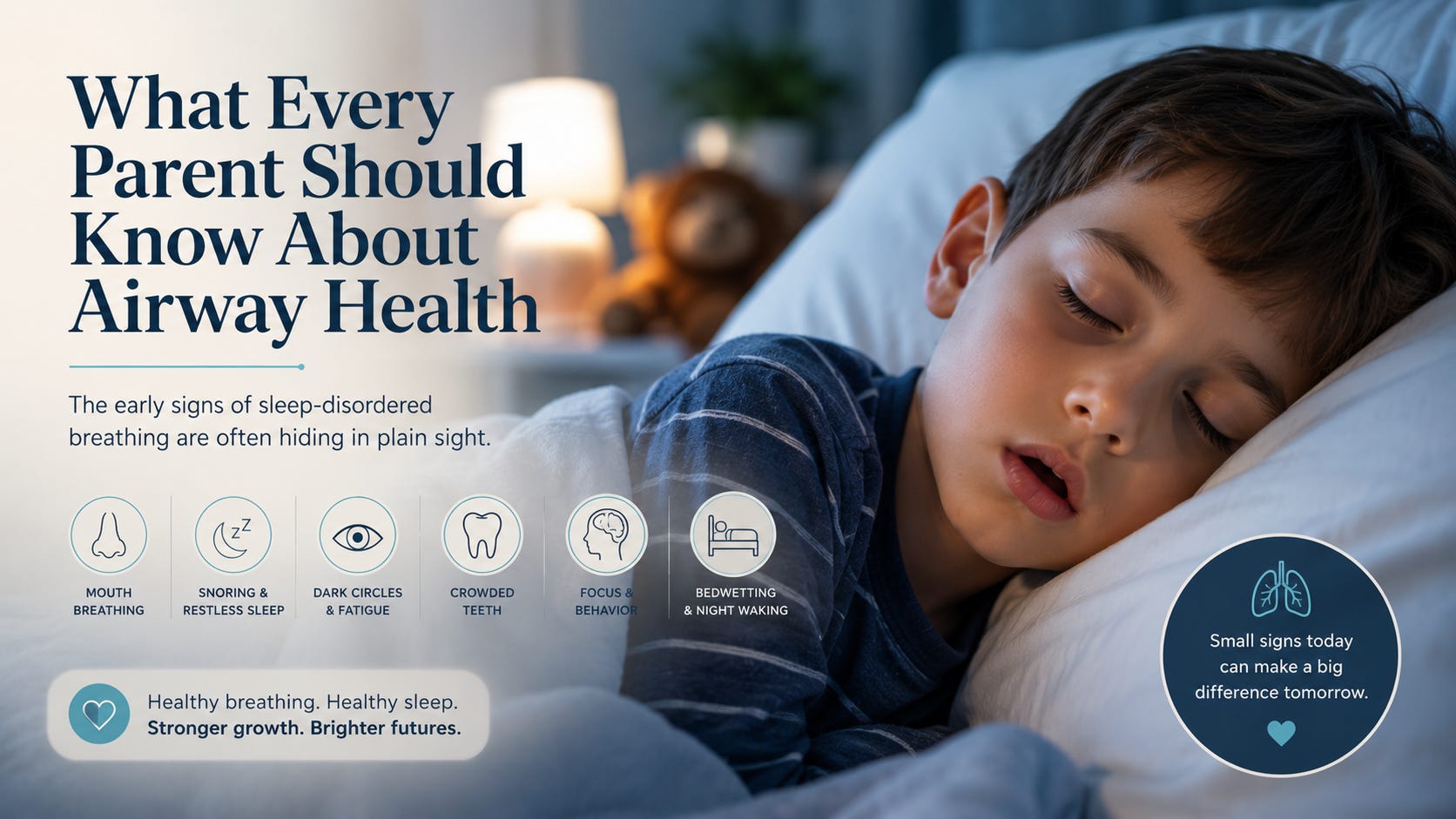
Most parents are familiar with the signs of common childhood illnesses such as fever, ear infections, sore throats, or stomach viruses. Airway problems, however, present differently. Their signs are often subtle and may not manifest as obvious breathing difficulties. Instead, airway issues may present as restless sleep, behavioral challenges, difficulty concentrating, chronic fatigue, crowded teeth, or a child who never seems fully rested. Because these symptoms often appear unrelated, airway health is frequently overlooked. Nevertheless, healthy breathing during sleep is a critical foundation for childhood growth and development.
In my clinical experience, I have observed how easily these patterns can be overlooked or misattributed to other causes. Children experience rapid growth and development, and the period when the face, jaws, and airway are forming is a critical window. Both clinical observation and emerging research indicate that a child’s breathing, particularly during sleep, can influence not only nighttime rest but also daytime behavior, facial development, attention, and overall vitality. The primary challenge for both parents and clinicians is to recognize early indicators before they become entrenched patterns.
Snoring Is Not Normal
A common misconception is that snoring in children is harmless. While occasional snoring may occur during illness or seasonal allergies, habitual snoring should not be dismissed. Snoring indicates airway resistance and suggests that breathing requires more effort than usual.
Not every child who snores has obstructive sleep apnea. However, consistent snoring warrants further evaluation. Research indicates that habitual snoring affects a significant percentage of children and may serve as an early marker of sleep-disordered breathing. In my practice, parents are often surprised to learn that what they considered to be “deep sleep” or a benign habit may require professional assessment.
Mouth Breathing Matters
Healthy breathing begins with the nose. Nasal breathing helps regulate airflow, filter particles, humidify incoming air, and support healthy facial development. When children breathe primarily through their mouths, a different pattern often develops.
Parents may observe an open-mouth posture during the day, dry lips, noisy breathing, chronic congestion, restless sleep, or frequent awakenings. Over time, chronic mouth breathing can influence facial growth patterns and airway development. The tongue’s natural resting position against the palate is essential for proper jaw expansion. When this posture is altered, the long-term effects may extend beyond breathing to include changes in dental alignment and facial structure.
The Child Who Never Seems Rested
Many adults with poor sleep become tired. Children often respond differently. Instead of appearing sleepy, they may appear hyperactive. Parents and teachers may notice difficulty focusing, impulsive behavior, emotional volatility, poor attention span, or academic struggles.
In some cases, poor sleep quality may contribute to these challenges. The brain cannot function optimally when restorative sleep is consistently disrupted. What may appear as a behavioral or attention issue can, in part, reflect the body’s response to fragmented nighttime breathing. Over the years, I have observed many children whose daytime functioning improved after addressing underlying airway factors.
Dark Circles Under the Eyes
Airway-focused practitioners often refer to these as “allergic shiners.” Although dark circles can have multiple causes, they are frequently observed in children with chronic nasal congestion and airway challenges. When present alongside mouth breathing, poor sleep, or snoring, they may serve as an additional indicator warranting further investigation. The discoloration results from congestion that impairs blood flow and drainage around the eyes, providing an outward sign of an underlying airway issue.
Crowded Teeth Are More Than Cosmetic
Parents are often informed that their child simply inherited crooked teeth. While genetics can play a role, crowded teeth may also indicate insufficient jaw development, resulting in inadequate space for proper tooth eruption. Since the jaws support the airway, dental crowding may represent more than an orthodontic concern and can provide insight into overall facial development.
When the maxilla and mandible do not develop adequate transverse width, airway space may also be compromised. In my clinical work, I frequently observe these dental findings alongside other signs of sleep-disordered breathing. Early intervention to address airway issues can positively influence both dental and respiratory outcomes in growing children.
Bedwetting and Restless Sleep
Many parents are surprised by this connection. Children with sleep-disordered breathing often experience tossing and turning, unusual sleeping positions, sweating during sleep, bedwetting, or frequent awakenings. The relationship is not always apparent, yet healthy breathing and healthy sleep are closely linked. Research has documented an association between nocturnal enuresis and obstructive sleep apnea in children, with bedwetting sometimes improving when airway issues are addressed. This represents another important aspect that warrants attention rather than dismissal.
What Parents Can Do
The objective is not to create anxiety, but to promote awareness. Parents should not attempt to diagnose airway problems independently. Instead, they are encouraged to observe and document any concerning patterns.
Questions worth asking include:
Does my child snore regularly?
Does my child breathe through the mouth during the day?
Does my child sleep restlessly?
Are there signs of chronic congestion?
Does my child wake refreshed?
Are there concerns about focus, behavior, or daytime energy?
If multiple signs are present, consulting a healthcare provider experienced in airway health is advisable. Pediatric dentists, ENT physicians, sleep specialists, and myofunctional therapists are among the professionals qualified to evaluate these patterns. Early recognition enables families to consider interventions while growth and development are ongoing.
Final Thoughts
Childhood growth occurs only once. The years of facial growth and development present a unique opportunity to support healthy breathing, sleep, and overall function. Many airway concerns are subtle and do not present with dramatic symptoms. Instead, they often manifest as small clues throughout childhood, such as nightly snoring, waking with dark circles or a dry mouth, or persistent restlessness and difficulty focusing during the day.
The primary challenge lies in learning to recognize these subtle indicators. Often, the most significant signs go unnoticed in everyday life.
Dr. John Johnson, DDS
Midwest BioHealth
The Johnson Papers
References
Mayo Clinic. Pediatric obstructive sleep apnea — Symptoms and causes. Updated November 2024.
Andreu-Codina M, et al. The Relationship between Nocturnal Enuresis and Obstructive Sleep Apnea in Children. Children. 2024;11(9):1148.
Kirkham EM. Sleep-Disordered Breathing in Children. JAMA Otolaryngology–Head & Neck Surgery. 2022.
Heit T. Craniofacial Sleep Medicine: The Important Role of Dental Professionals. 2022. PMC9323037.
Kuehni CE, et al. Snoring in preschool children: prevalence, severity and risk factors. Eur Respir J. 2008.